

Quick answer
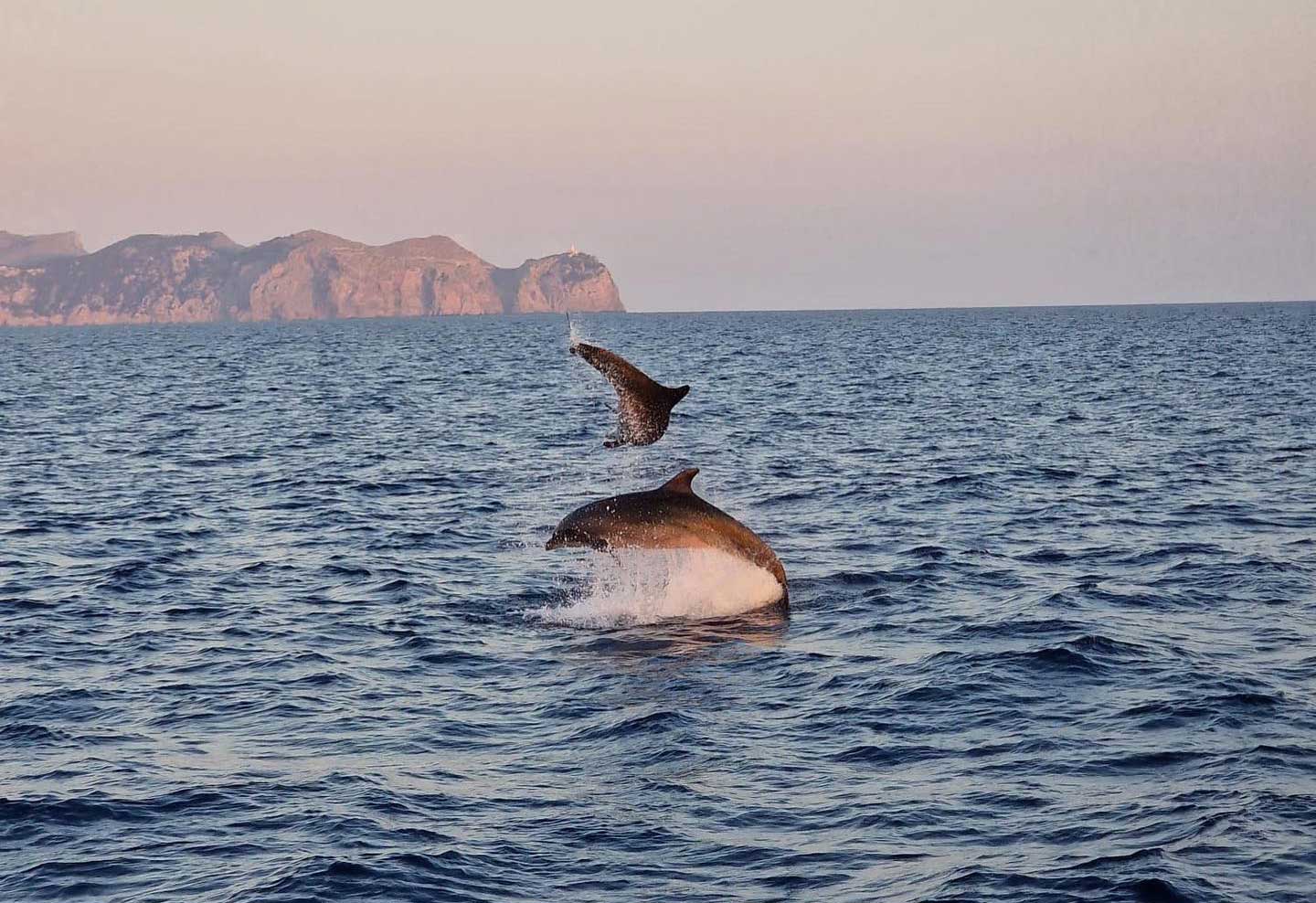
Yes, there are dolphins in Mallorca. Three species inhabit the waters surrounding the island: bottlenose dolphins, striped dolphins and common dolphins. Bottlenose dolphins remain in Mallorcan waters year-round, particularly along the northwest coast between Port de Sóller and Cap de Formentor. Striped and common dolphins migrate through the deeper offshore waters, with sightings concentrated between April and October when sea temperatures rise above 18°C.
Bottlenose dolphins form the most stable population in Mallorca's coastal ecosystem, with an estimated 120 individuals documented by the Tursiops Association since 2014. These dolphins favor the steep underwater topography along the Serra de Tramuntana coastline, where the seabed drops rapidly from 20 to 200 meters within half a kilometer of shore. The depth gradient concentrates their primary prey—sardines, anchovies and cephalopods—in predictable zones accessible to boat tours departing from Alcúdia, Pollença and Port de Sóller. Striped dolphins and common dolphins occupy different ecological niches. Striped dolphins travel in larger pods of 20 to 40 individuals, cruising the open waters beyond the 100-meter isobath where they hunt squid and lanternfish. Common dolphins, distinguished by their hourglass flank pattern, appear less frequently but in spectacular aggregations of up to 200 animals when seasonal upwellings bring nutrient-rich currents to the Balearic archipelago. Both species follow the spring and autumn migrations of tuna and mackerel schools, making May through June and September through October the statistically strongest months for multi-species sightings. Whether dolphins appear on a given morning depends on variables tour operators cannot control: wind speed, sea state, water clarity and the stochastic behavior of wild animals. Departures between 05:30 and 08:00 capitalize on calm morning conditions and the dolphins' early foraging activity before midday wind patterns roughen the surface. Tours from northern ports like Alcúdia report sighting rates above 70 percent during peak months, while southwestern departures from Paguera encounter dolphins less reliably due to heavier boat traffic and less favorable bathymetry. No tour guarantees sightings, but understanding where Mallorca's three species feed, breed and migrate narrows the margin between hope and probability.
“Bottlenose dolphins favor the steep underwater topography along the Serra de Tramuntana coastline, where the seabed drops rapidly from 20 to 200 meters within half a kilometer of shore.”
Best Time to See If Are There Dolphins in Mallorca
The best time for dolphin watching in Mallorca is during the early morning hours, specifically within the 05:30–08:00 arrival window. These hours offer the most favorable light conditions and calmest sea states, which are critical for increasing the probability of spotting marine wildlife.
Spring (April–May)
Moderate crowdsMild 18-22°C; stable seas
Spring offers calm waters and active dolphin pods before the peak heat.
Summer (June–August)
High crowdsWarm 25-30°C; early morning calm
Early morning departures are essential to avoid afternoon sea breezes.
Autumn (September–October)
Low crowdsPleasant 20-25°C; clear waters
Post-summer months provide excellent visibility and calmer sea conditions for boat excursions.
Daily Mornings
Minimal daily crowds—
The 05:30–08:00 window is standard for successful sightings due to consistent morning water stability.
Verdict: The most effective time for a successful sighting is the 05:30–08:00 arrival window during the quieter months of April or October.
Operating Hours for Tours Where Are There Dolphins in Mallorca
Tours for observing dolphins in Mallorca operate daily throughout the week. These departures are scheduled to align with maritime conditions that favor dolphin activity.
| Monday | 05:30–20:00 | |
|---|---|---|
| Tuesday | 05:30–20:00 | |
| Wednesday | 05:30–20:00 | |
| Thursday | 05:30–20:00 | |
| Friday | 05:30–20:00 | |
| Saturday | 05:30–20:00 | |
| Sunday | 05:30–20:00 |
Admission Fees and Are There Dolphins in Mallorca Trip Costs
There is no entrance fee to observe dolphins in the wild off the coast of Mallorca. Costs for dolphin watching are determined solely by the private tour operators providing the boat services.
Adults typically pay market rates set by independent providers, which vary depending on the tour duration and boat type.
How to Reach Ports Where Are There Dolphins in Mallorca
Dolphin watching excursions depart from several key harbors around the island, including Alcudia, Pollença, Port de Soller, and Paguera. Travelers typically reach these coastal locations via car or regional bus services.
Ma-13 to Alcudia or Pollença; Ma-11 to Port de Soller; Ma-1 to Paguera
TIB lines 302, 322, 204, or 102
Direct transfer to harbor
Interesting Facts About Are There Dolphins in Mallorca
The Balearic Sea serves as a critical habitat for several dolphin species, supported by its diverse underwater topography and stable food sources. These marine mammals exhibit complex social behaviors that can be observed in their natural environment throughout the year.
2 species dominate local sightings
The striped dolphin and the Risso's dolphin are the most frequently recorded species in the waters surrounding Mallorca. Both species utilize these deep-sea corridors for hunting and social interaction.
3,000 meters average depth
The Balearic Sea features deep submarine canyons and varied bathymetry that provide refuge for cetaceans. This topography supports a rich ecosystem that attracts pelagic fish, which in turn sustains dolphin populations.
24-hour social behavior patterns
Dolphins in this region maintain complex social hierarchies and cooperative hunting techniques. Research indicates these groups often split and merge throughout the day to optimize foraging efficiency.
40 kilometers per hour speeds
Common dolphins are capable of reaching high burst speeds when chasing schooling fish. They use these physical capabilities to navigate the currents prevalent around the Balearic Islands.
15 to 20 years lifespan
While many species can live longer, dolphins in the Mediterranean face unique environmental pressures that influence their life cycles. Marine conservation efforts focus on protecting these specific populations to ensure long-term stability.
Complex communication systems
Dolphins utilize signature whistles and clicks to maintain contact within their pods. These acoustic signals are essential for navigation and coordinating movements in the open sea.
Preparation Checklist for Are There Dolphins in Mallorca Tours
Book your dolphin-watching tour in advance and pack the essentials for a comfortable morning on the water.
-
Book your tour online — Operators fill early, especially May through September.
-
Bring booking confirmation — Digital or printed copy required at departure port.
-
Wear non-slip deck shoes — Wet boat surfaces can be slippery during the excursion.
-
Pack sun protection and layers — Morning sun is strong; winds pick up on open water.
-
Bring water and light snacks — Most tours last 2–4 hours with limited refreshments.
-
Charge camera and phone fully — Dolphin sightings happen quickly and batteries drain fast at sea.
-
Arrive 15 minutes before departure — Captains brief passengers and depart punctually from the scheduled port.
Check availability
Common Questions About Dolphin Watching in Mallorca
Everything you need to know about are there dolphins in mallorca